Generative Music, the Recurring Boundary of the "Real" Musician, and the Motivated Belief that a Machine Made the Song
by Salad839
Abstract
When a chart-topping track is suspected of having been generated rather than played, the public dispute presents itself as a factual disagreement about method. I argue that it is not, at bottom, only a factual disagreement, and that treating it as one obscures what is actually happening. Four claims are developed. First, in the contested cases the factual question is underdetermined at the level of certainty the disputants claim: forensic and provenance evidence can move a rational credence, but not to the confidence on display. Second, belief nonetheless clusters at the extremes, and this pattern is not new; the same charge of counterfeit, in almost the same words, met the synthesiser, the drum machine, and disco, and before them jazz, though these episodes are overdetermined and their skill-anxiety is braided with race, class, and sexuality rather than reducible to skill alone. Third, the act of exclusion is authentication in the sense of the popular-music-studies literature, authenticity being ascribed rather than inscribed, and it is best understood as field-level boundary-work over cultural capital, executed in individual judgment through identity-protective cognition, which the evidence shows expertise does not correct. Fourth, the same contested premise about human creativity that animates the cultural dispute also surfaces within copyright doctrine, in the human-authorship requirement and the analysis of transformativeness. Using a deliberately stipulated case, I argue that the belief "a machine made the song" often functions less as a conclusion from evidence than as a boundary-defending act, while granting that in one respect, the reuse of prior labour, the incumbents may point at a real harm. My conclusion is not that generative music is good or that any given track is human-made, but that the debate is conducted as fact and substantially settled by identity.
1. THE REACTION AS THE OBJECT OF STUDY
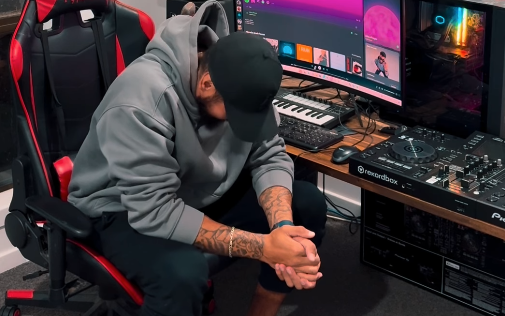
Consider a case of a kind that has lately become common. A producer reaches the top of the national airplay charts with a cover of a well-known song, and is met not with the ordinary indifference reserved for chart pop but with something closer to moral fury. Other producers dissect the recording for the acoustic fingerprints of a generative model. Musicians say publicly that the maker is not an artist, that the work is fraudulent, that a place has been taken which belonged to someone who had earned it. The maker replies that artificial intelligence was used "as a tool" and that "it's not that deep," and the reply is treated as an aggravation of the offence. The vocabulary is not that of aesthetic disagreement. It is that of heresy.
I take this composite as a stipulated case rather than a report of any particular person, and the stipulation is deliberate, because the argument turns on the fact that an onlooker cannot tell from the finished recording how it was made. Real instances of the pattern are easy to find; the Australian producer Josh Fawaz was widely accused along these lines in 2026 after a charting AI-assisted cover, and the broad shape of that episode, a verified chart result accompanied by an unverified account of method and a chorus of confident accusation, is the shape I have in view. But nothing below depends on the particular facts of any real person's practice, which is fortunate, since those facts are exactly what the disputants do not possess. I therefore reason about a case in which, by construction, the method is not settled by the available evidence, and ask why the reaction to such a case takes the form it does.
The reaction is disproportionate in a specific and revealing way. Someone used a piece of software and released a pop cover, and the response treats this as a betrayal at the centre of something sacred, the response one expects toward an apostate rather than a competitor: a figure who was supposed to embody a value has been exposed as violating it, and the exposure threatens the value itself. My question is why a tool should provoke a reaction of that kind, and the answer I defend is that it lies less in what the tool does to music than in what the accusation does for the accuser, and that we see this most clearly once we notice that the accusation is not new. I use "heretic" and "apostate" in what follows as names for the role the accused is made to occupy in this discourse, not as a description I endorse.
The argument proceeds in six stages. Section 2 establishes that the factual question is underdetermined at the level of certainty the disputants claim, and that belief nonetheless clusters at the extremes. Section 3 places the present dispute in a lineage, showing that the same accusation met earlier music technologies and genres, while conceding that those episodes are overdetermined. Section 4 identifies the act of exclusion as authentication and locates its engine, identity-protective cognition, within a field-level account of boundary-work. Section 5 tests the account against the philosophy of creativity, granting what is sound in the process view and meeting the strongest principled objection to my thesis, which comes from the philosophy of forgery. Section 6 notes, in a brief coda, that the same premise surfaces inside copyright doctrine. Section 7 answers objections.
2. THE UNDERDETERMINATION OF METHOD
I begin with a point that is easy to grant and important to state carefully: in the contested cases, no one on either side knows, from the recording alone, how it was made. This is not the strong and false claim that nothing could bear on the question. It is the narrower claim that the finished artefact does not, by itself, settle the method to the degree of certainty the disputants assert. Critics report hearing generative artefacts, an unnatural smoothness, a frequency ceiling near twenty kilohertz, a vocal that seems reconstructed rather than merely tuned. The maker reports a workflow combining performance, arrangement, and machine assistance. Forensic audio analysis, provenance metadata, and knowledge of base rates can move a careful listener's credence well away from indifference; someone may rationally come to think it quite likely that a machine did most of the work. What none of this delivers, in the disputed cases, is the near-certainty and the contempt that the discourse in fact exhibits. The gap I am concerned with is therefore not between total ignorance and knowledge, but between the confidence the evidence licenses and the confidence displayed.
This underdetermination is not incidental; it is a structural feature of prompt-based production. A generative platform such as Suno compresses the stages of conventional production into seconds and absorbs recorded human performance as input: a user may upload their own audio, write their own lyrics, sing a line the system then reworks, or specify nothing beyond a genre and accept the return (Nugroho and Manggala 2024; Tan 2026). The same finished file may sit at very different points along that range of human involvement, and it does not, on inspection, announce which. An interpretive study of Suno's spectral outputs found that listeners readily project detailed emotional and scenic meaning onto material the system produced without any awareness or intention (Huang 2025), a finding worth heeding in both directions: the ear supplies a great deal the artefact does not contain, whether it is an enthusiast's ear hearing depth or a critic's hearing fraud.
What matters is what people do with a question that the evidence leaves open at the top of the confidence scale. Rather than distribute themselves across the range that mixed evidence would warrant, from mild suspicion to strong probability, participants cluster at the ceiling, and hold the verdict in a manner that no further evidence could revise: if the maker offers no proof, the absence confirms the fraud; if proof is offered, it confirms that the maker is sophisticated enough to fake sincerity. A belief that converts every possible observation, including contradictory ones, into further support for itself has stopped tracking the evidence, even if the proposition it fixes on is true. The remainder of this paper asks what, other than the evidence, is setting the dial.
3. THE RECURRING BOUNDARY
The answer comes into focus once we stop treating the dispute as unprecedented. The accusation levelled at the prompter, that a button is pressed and the result claimed as one's own, that no real skill stands behind the sound, that this is not real music and its maker not a real musician, is among the most frequently repeated accusations in the history of popular music, and it has more than once been redrawn out of existence a generation later.
Consider the sequence, with a caution I will enter immediately and then honour. When inexpensive synthesisers, drum machines, and sequencers spread from the late 1970s, they were condemned as a means for people who could not really play to sound as though they could; Paul Théberge's history identifies the underlying tension precisely, between a belief that acquiring musical skill demands concentrated effort, a work ethic, and a technology that let a songwriter produce fully arranged music without the collaborators or the years that ethic assumed (Théberge 1997). The drum machine was said to have no feel; the sequencer to play the part for you. Disco, in the same years, was declared plastic and soulless for its reliance on studio production and its distance from guitar-based performance, and its records were destroyed in a stadium. Earlier still, the guardians of European art music had denied that jazz was music at all, hearing in its rhythm and improvisation not a discipline but its absence.
The caution is this: none of these episodes was only about skill, and to present them as a clean sequence of skill-panics would falsify them. The disco backlash, culminating at Comiskey Park in 1979, is understood by historians of the music as substantially a racialised and homophobic reaction, disco being Black, Latino, and gay music, so that the complaint that it was mere machinery was in large part a respectable proxy for animus that could not speak its name (Frith 1996). The dismissal of jazz was inseparable from the racial anxieties of its moment. Even the synthesiser panic carried class and gender codes about who counted as a serious musician. So the pattern I am describing is real but overdetermined: skill-boundary anxiety is one strand braided with race, class, sexuality, and economic threat, and it frequently serves as the sayable version of animus whose real grounds are less respectable. This does not weaken my thesis; it sharpens it. The recurring appeal to skill and realness is doing concealment work, offering a defensible-sounding criterion in place of a motive the speaker may not avow even to themselves, which is exactly the pattern of motivated cognition that section 4 describes.
One member of the sequence resists assimilation, and I include it because the resistance is instructive rather than convenient. When hip-hop built an art form on the sampler, the objection was not only that machines were doing the skilled work but that other people's recorded labour was being reused without consent or payment, and that objection was not a false panic later dissolved. It was litigated, and substantially vindicated: the law came to require clearance, and the practice was reshaped around it. Sampling therefore does not belong with the drum machine among the panics that hindsight simply retracted. I flag it now because it is the case that most resembles the present one. The complaint against generative platforms is not only that a machine makes the sound but that the machine was built from an enormous quantity of prior musical labour, absorbed as training data without the consent of those who made it. That is a whose-labour objection of the sampling kind, and it may point at a real harm rather than a mere boundary. I return to it in sections 6 and 7; here I concede at once that the recurring reaction is not always mistaken, and that showing a reaction to be recurrent is not by itself showing it to be wrong.
With that conceded, the structure of the recurring case can be stated. A form of music-making confers identity and worth on those who have acquired a scarce, embodied skill. A technology arrives that makes some valued output obtainable with less of that skill, or with a different skill the incumbents do not recognise. The incumbents do not revise their sense of what music is; they relocate the boundary of the "real" so that it falls just outside the newcomer, and defend the new boundary in the language of authenticity, fraudulence, and theft. In each earlier case, save the sampler, the boundary was redrawn again once the suspect tool had become unremarkable, so that today no one disputes that a producer triggering a drum-machine pattern is making music. The critic who mocks the mechanical straightness of an AI vocal is the descendant of the critic who mocked the rigidity of the drum machine, and the one who says typing a prompt is not making music descends from the one who said the same of programming a sequencer.
This is the shape of a familiar fallacy. To insist that no true musician makes music this way, and to treat every counterexample as showing merely that the person was no true musician, is a no-true-Scotsman move: the criterion of the "real" musician is silently adjusted whenever a case threatens it. What the history shows is that this move is the ordinary way musical communities respond to the technological lowering of a skill barrier. It does not follow that the newest instance must be another false alarm; that would be its own hasty induction, and the sampler shows that the reaction is sometimes partly right. What follows is weaker and sufficient: the recurrence shifts the burden onto anyone who claims that this time the boundary tracks a real and stable feature of music rather than the identity of the excluded, and it supplies a standing hypothesis, motivated boundary-defence, against which the present case must be tested. The strongest attempt to discharge that burden appeals to a difference in kind, and I take it up in section 5.
4. AUTHENTICATION, BOUNDARY-WORK, AND THE ENGINE OF MOTIVATED BELIEF
If the boundary of the "real" musician is repeatedly relocated to exclude a newcomer, we should ask what kind of act relocating it is, at what level it operates, and what drives it in the individual who performs it. Three literatures answer these three questions, and they are complementary rather than competing.
What kind of act. Authenticity in music, as Allan Moore argues, is not a property inscribed in a sound but a status ascribed to it; it is "ascribed, not inscribed," and it emerges from the discourse of listeners, critics, and musicians rather than from objective features of the work (Moore 2002). To call music authentic or inauthentic is to perform an act of authentication, an assignment of value that draws a boundary. Moore's account tells us what the disputants are doing, drawing and policing a line, but it deliberately does not tell us why the line falls where it does or why it is defended with such heat; it describes the practice without supplying its motive, and the remainder of this section supplies what Moore's descriptive point leaves open.
At what level. The obvious first answer is sociological, and I want to grant it its due rather than bypass it. Long before the vocabulary of cognitive bias, the policing of the boundary between real and unreal music was understood as boundary-work in a field: the maintenance of a hierarchy and the defence of accumulated cultural capital, performed collectively through the institutions of criticism, the charts, and the conferral of the name "artist" (Bourdieu 1984; Becker 1982). On this account the incumbents' reaction is not an individual malfunction but rational, even skilled, labour from the standpoint of protecting a field and the value of a position within it; distinction is produced precisely by drawing and enforcing such lines. Any adequate treatment of the present dispute has to concede that much of what looks like error at the level of the individual judgment is, at the level of the field, functional boundary-maintenance. The recent ethnomusicological literature on generative platforms extends this framework to our case, arguing that AI-generated music is exactly the kind of material whose authenticity is contested between an emic perspective, the self-understanding of a community of practice, and an etic one, the external analyst's designation (Tan 2026). It is worth being careful with one tempting analogy here. Turino's participatory performances, in which the distinction between performer and audience dissolves and the sound is subordinate to the act of taking part, are sometimes invoked to place the prompter in the ambiguous position of the crowd singing a football anthem (Turino 2008). But the charting prompter is not doing something participatory; releasing a record for mass listening is paradigmatically presentational, an artefact offered by a maker to an audience, with the maker claiming the artist's position. That is precisely why the reaction is so sharp. The offence is not that a participant hums along but that someone the incumbents regard as a mere participant has stepped into the presentational field and claimed authorship there.
What drives it in the individual. The field-level account explains the function of boundary-work but not the phenomenology of the particular judgment, the individual critic's felt certainty that this record is a fraud. Here the psychology of motivated reasoning supplies the micro-mechanism through which the macro-level boundary-work is executed in a single head. Dan Kahan and colleagues have shown that when a factual belief becomes bound up with membership in a group whose identity one values, people process evidence not chiefly to reach the truth but to protect the belief, because it now signifies belonging and its abandonment would register as defection; Kahan characterises such cognition as information processing that promotes people's interest in "forming and maintaining beliefs that signify their loyalty to important affinity groups" (Kahan 2013). This is not offered as a replacement for the sociological account but as its complement: field-level boundary-work is how the exclusion functions socially, and identity-protective cognition is how that same exclusion is carried out in the individual act of judgment, felt from the inside not as loyalty but as simply seeing what the evidence shows.
I should say why the extension of Kahan's findings to this case is legitimate, since his experiments concern politically contested empirical propositions rather than judgments about a recording. The transfer does not rest on the content being political. It rests on the structural condition Kahan identifies as the trigger: a factual belief that has become a badge of membership in a valued group, such that revising it threatens the self. That condition is plainly met for the working musician. The proposition that real music is made by human beings exercising hard-won skill is not merely a view about music; it underwrites a life, the surrendered years, the identity built on the difference between those who can do this and those who cannot, the claim to worth staked on that difference being real and being valued. Generative music threatens the proposition itself, by suggesting that what the skill produced can be had without the skill. Where a belief carries that load, the conditions Kahan describes obtain, whatever the subject matter, and the prediction is that evidence will be recruited to defend the belief rather than to test it.
This is why the accusation does work for the accuser independently of its truth. To assert that the record is machine-made, and its maker therefore a fraud rather than an artist, is to reaffirm the boundary on which one's own standing depends, relocating the newcomer to the far side of the line and re-securing the line and the worth of everyone on the near side. The intensity is not excess but function: the more the boundary is threatened, the more its policing is worth to those it protects. There is a further consequence that inverts a natural assumption, and it must be stated carefully to avoid over-claiming. One might expect the trained musician to be a more reliable judge than the layperson of whether a record is machine-made. What the motivated-reasoning literature shows is narrower than the reverse of this: greater analytic and reflective capacity does not attenuate identity-protective distortion and can even magnify polarisation, because the more capable reasoner is better equipped to construct justifications for the conclusion their identity favours (Kahan 2013). The implication is not that the expert is, on balance, a worse detector than the novice; the expert's ear may well be more discriminating. It is that expertise does not insulate the judgment from the distortion, and that the same skill which detects can also furnish a fixed conclusion with the appearance of dispassionate detection. The expert critic's certainty, in other words, is not self-certifying. Domain skill establishes that he can hear finely; it does not establish that, on this identity-laden question, his confident verdict is tracking what he heard rather than what he needed to conclude.
There is a name for what the accused suffers in this structure. His own testimony about his process, the one piece of evidence that bears most directly on the question, is discounted in advance because of who he is taken to be, a mere presser of buttons whose word about his own labour is worth nothing. This is a credibility deficit inflicted on a speaker by prejudice about his standing, a testimonial injustice of the kind Fricker has described (Fricker 2007), and it is produced by the very boundary-work under examination: the exclusion first defines the prompter as a non-musician and then cites his non-musician status as ground for disbelieving his account of having made music.
5. WHAT THE PHILOSOPHY OF CREATIVITY DOES AND DOES NOT LICENSE
An objector will say the recurrence proves nothing, because this time the sceptics are right on principle: prompting really is the absence of the skilled agency creativity requires, so the boundary is at last being drawn correctly. This deserves the strongest philosophical answer available, and the philosophy of creativity supplies it, though not in the objector's favour.
The dominant philosophical account of creativity is agentive. Berys Gaut argues that producing something original and valuable is not sufficient for creativity; the production must issue from agency exhibiting understanding, judgement, and what he calls flair. His illustration is decisive on its own terms: if in walking through a studio "you accidentally knock over a set of paints, which spill onto a canvas, and they happen to combine to produce a beautiful and original painting," you are not creative, "since the painting was purely the product of luck" (Gaut 2010, 1040). Creativity requires "at least a relevant purpose … some degree of understanding … a degree of judgement … and an evaluative ability directed to the task at hand" (Gaut 2010, 1040). Claire Anscomb applies exactly this standard to generative systems, arguing that although their outputs may be novel, the systems possess no beliefs, intentions, or evaluative awareness, and so are not the locus of creativity even when their products are good (Anscomb 2022). This is the strongest version of the process intuition behind the slogan that art is the process and not merely the result, and I take it to be substantially correct.
But notice what it does and does not entail for our prompter. Gaut's condition is a claim about the agency and skill of a maker, not about whether a machine appears in the causal chain. If the human conceived the arrangement, directed the tools, exercised judgement over what to keep and discard, and shaped the result through understanding, then the very condition the process view demands is satisfied, machine or not; the human's purpose, understanding, judgement, and evaluation are present, and the tool's involvement is beside the point, as the involvement of the arpeggiator or the sampler is beside the point. If instead the human entered a single request and accepted the first return without discrimination, the process view faults him, but for the absence of skilled agency, not for the presence of a computer. Either way the moral weight falls on how the human engaged, which is exactly what no one can read off the finished file. The theory that could in principle convict our maker convicts him only on facts about his process that the accusation does not possess, and the same theory acquits a different user who did the same typing with more judgement.
The objector's best reply is to insist that the difference is one of kind, not degree: earlier tools automated the execution of a conception the human supplied, whereas the generative model can automate conception itself, and it is conception that the process view prizes. This is the strongest form of the objection and I do not think it can be waved away, but it does not do what the objector needs. It is true that delegation can go so far that the human no longer retains what the extended-cognition literature calls the locus of control, the ongoing authorship of the result, and that a single-word prompt accepted at first return may be such a case. But this is a threshold along a dimension the tradition has always occupied, not a bright line newly crossed. The arpeggiator sounds a patterned sequence the performer did not specify note by note; the sampler builds new music from invention that is literally someone else's; both delegate a portion of conception, not merely execution, and both were absorbed once it was seen that the human could still exercise governing judgement over the whole. The question raised by the generative model is the same question in a more acute form: how much conception may be delegated while the human still retains authorship of the result. That is a real and hard question, and it is answered case by case, by attending to what this maker actually did. It is not answered by the observation that a machine was capable of more, which tells us about the tool and not about the use. To treat the mere capacity for delegated conception as disqualifying, regardless of how it was exercised, is once again to draw the boundary in advance of the facts.
It helps to make the spectrum explicit, because the dispute trades on collapsing it. At one end stands the case the sceptic always describes: a single word entered, the first return accepted, nothing selected, nothing revised. Here the process view's verdict is severe and, I think, correct, since there is no relevant purpose beyond the wish for a result, no understanding brought to bear, and no judgement exercised over what returned, so that by Gaut's criteria there is no creativity, whatever the quality of the output. At the other end stands a workflow that uses generative tools as none of the accusation's imagery anticipates. Consider a maker who begins from a source text, interrogates it until its themes are understood, generates candidate directions and discards most, drafts lyrics and revises them across many passes with attention to prosody, stress, and rhyme, then treats a machine arrangement not as the work but as a sketch, generating it dozens of times to harvest fragments, and finally re-records every part with human performers and a human voice, so that the released artefact contains no machine-generated audio at all. Between these poles lies every intermediate degree of engagement.
Two things follow, and they are the two the discourse refuses to hold together. First, authorship tracks position on this spectrum, not the mere presence of the tool. What makes the second maker an author is not that a machine was absent, for it was heavily present in the drafting, but that conception, selection, judgement, and execution remained hers throughout; she retained the locus of control, and the tool occupied the place a thesaurus, a session player's suggestion, or a scratch demo occupies, an input she governed rather than an author that displaced her. This is precisely the distinction the process view draws, and, as it happens, the one the law has begun to draw as well: that purely prompt-generated material is not authored by its user, while outputs into which a human has introduced sufficient expressive contribution can be (U.S. Copyright Office 2025). The line falls not at the involvement of the machine but at the presence of governing human agency, which is a fact about the making and not about the medium.
Second, and this is the point on which the whole paper turns, one cannot locate a given work on this spectrum by listening to it. The finished file does not announce whether it issued from the single word or from the hundred revisions; the second maker's track and a machine's imitation of it may be perceptually close, and the difference between them lives in a process the recording does not contain. So the confident verdict, that this record is the button-presser's fraud rather than the reviser's achievement, is not read off the evidence, because the evidence that would settle it is exactly what is absent. To treat every use of the tool as the thin case, and every maker as the button-presser, is not to apply the process view; it is to assume the answer the process view says can only be reached by attending to what the particular human actually did.
There remains a principled objection of a different and deeper kind, and it is the one my thesis must genuinely confront, because unlike the others it does not depend on any claim about what the prompter did. It comes from the philosophy of forgery. A perfect forgery may be perceptually indistinguishable from the original and yet be worth less, and worth less legitimately; as Lessing argued, what is wrong with a forgery is not how it sounds or looks but that it misrepresents its origin, and that it claims an achievement, an originality, that belongs to another (Lessing 1965). If that is right, then origin can rightly govern our valuation of an artefact even when it makes no perceptible difference, and the incumbents' fixation on how the music was made is not obviously mere boundary-policing; it may be a defensible insistence that achievement, and not only sound, is what we value in music. This is the strongest resistance to my argument, and I want to concede its core while marking its limit. The concession: the process view and the forgery tradition are jointly right that origin and achievement matter, that two perceptually identical tracks can differ in worth because one embodies skilled human accomplishment and the other does not, and that a culture may legitimately care about this. My thesis does not require denying it. What my thesis requires is only that caring about achievement does not license the epistemic move the discourse actually makes, which is to leap from "achievement matters" to a confident verdict that this record lacks it, on evidence that does not support the verdict. The forgery analogy in fact underscores the point. What makes a forgery a forgery is a fact about its origin; whether a given object is a forgery is precisely what one cannot always tell by looking, which is why attribution is difficult, contested, and sometimes wrong. To value authentic achievement is one thing; to be certain, of a particular underdetermined case, that one is in the presence of a fake, and to treat the maker with the contempt owed to a fraud, is another. The first is a legitimate value. The second is the motivated verdict, and the value does not underwrite it.
So the philosophy of creativity, and even the philosophy of forgery that most resists me, relocates the question rather than settling it against the prompter. Both make origin and agency matter; neither delivers the confident negative verdict on the particular case. The reaction, which fixes on the mere involvement of the machine and reaches certainty about a fraud, is not the application of these theories. It is the boundary-defending act of section 4 borrowing their authority.
6. A NOTE ON THE PREMISE INSIDE THE LAW
The dispute reaches into the law, though more modestly than a first look suggests, and I offer this only as a gesture toward work that belongs to legal scholars. It is tempting to say that the record labels' copyright suits against the generative-music companies rest on a contested aesthetic premise, since their pleadings argue that the outputs are imitative machine productions rather than human creativity or expression. But a complaint is an advocate's document, and one should not mistake its rhetoric for the doctrine a court would apply. The more interesting observation is that the contested premise is not confined to the pleadings; it is already embedded in copyright doctrine itself. United States law conditions copyright on human authorship, and recent decisions and guidance have denied protection to material lacking a sufficient human author (Thaler v. Perlmutter 2023, aff'd 2025; U.S. Copyright Office 2025, which concludes that prompts alone do not give a user sufficient control to author the output). And the fair-use analysis of transformative use, reshaped by the Supreme Court's turn toward asking whether a use merely substitutes for the original (Andy Warhol Foundation v. Goldsmith 2023), requires courts to assess the nature and purpose of the human contribution. In both places the law must decide what counts as a human creative contribution as opposed to mechanical output, which is exactly the process-and-agency question the philosophy of creativity has not closed. The aesthetic dispute this paper anatomises is thus not only in the comment section; a version of it is doing work inside the doctrine. I note, finally, that the framing of the industry's posture as simple conflict is already dated: major labels have moved toward licensing agreements with the generative-music companies, which suggests the training-data question, the whose-labour objection of section 3, is being resolved less by adjudication of what real music is than by negotiation over payment for prior labour. How these doctrinal and commercial questions should be settled is beyond both my competence and my argument; I claim only that the same unsettled premise about human creativity runs through them.
7. OBJECTIONS AND REPLIES
Five objections deserve reply.
First, that the critics are simply right: the artefacts are audible, the trained ear detects what the layperson misses, so the certainty is warranted and no appeal to motivated cognition is needed. This misidentifies the claim. I have not argued that no track is machine-made or that expert listeners never detect one; some are, and they sometimes do. I have argued that in the contested cases the available evidence does not support the degree of certainty on display, and that the observed distribution of belief, clustered at the ceiling and structured so that no possible evidence could revise it, is not the distribution warranted detection would produce. A reliable detector returns a graded credence and updates it; what we observe returns a verdict and immunises it. The presence of genuine skill does not explain the immunity.
Second, and relatedly, that the clustering is explained not by motivated cognition but by a fast, largely reliable perceptual heuristic that is merely overconfident, so no appeal to identity is needed. This is the most serious rival to my account and I concede it explains part of the data: expert listeners may indeed run a quick and fairly reliable detector, and simple overconfidence would produce certainty without any identity threat. But overconfidence alone does not predict the specific features that the identity account predicts and that we observe: the contempt, the moral rather than merely epistemic register, the pre-emptive discounting of the maker's own testimony, the intensity that scales with the threat to the incumbent's standing rather than with the strength of the acoustic evidence, and the imperviousness to disconfirmation. A miscalibrated heuristic gives a wrong number; it does not give a heretic. The identity account is needed to explain not that the verdict is confident but that it is furious and unfalsifiable.
Third, that motivated reasoning can reach true conclusions, so the diagnosis is beside the point. This is correct and does not touch the argument, which concerns warrant, not truth. A motivated belief may be true, and any given track may be machine-made. To hold a belief at maximal confidence, with contempt for dissenters, on evidence that does not support that confidence, is an epistemic failing even when the belief happens to be true, because the confidence is not answerable to the evidence that would make it knowledge. That it sometimes lands on a truth is luck, not vindication.
Fourth, that the whose-labour objection vindicates the incumbents after all: the training data really was taken, so the hostility is justified. I have granted in section 3 that this objection, unlike the skill complaint, may point at a real harm, and I do not dispute that the use of prior musical labour as training data raises a serious question of consent and payment. But notice that this justifies something quite different from what the discourse asserts. A grievance about uncompensated training data is a grievance against the platform and its makers, and it would be equally sound whether or not any particular user exercised genuine musical judgement. It gives no ground for the contempt directed at the individual prompter, nor for the confident verdict that his record is a fraud, nor for denying that he is a musician. Redirecting the legitimate labour grievance onto the individual maker, and dressing it as a verdict about his artistry, is itself part of the motivated substitution the paper describes: a real but impersonal harm is converted into a personal accusation that the evidence does not support.
Fifth, that by explaining the reaction I explain it away, licensing anything a prompter does and dissolving musicianship into button-pressing. I am not. The process view is a real standard, and by it much prompting is uncreative, the thin case of the single request accepted at first return; the forgery tradition is right that origin and achievement matter; the labour objection is right that consent and payment matter. A musical community is entitled to prize embodied skill, to build an identity on it, and to insist that achievement is part of what music is worth. What it is not entitled to do is to convert that entitlement into a factual certainty about how a particular record was made, to treat the maker as a fraud on evidence that would not support the verdict in any other setting, and to discount his account of his own labour because it has already classified him as the kind of person whose word does not count. That is the recurring error, and naming it is not the same as denying that skill, origin, or labour matter.
The belief "a machine made the song" is doing double duty. It presents as a conclusion about a recording and functions as a reaffirmation of the self, and when a belief does the second kind of work, evidence stops forming it and becomes the material recruited to defend it. That is why the argument is conducted with the heat owed not to a rival but to a heretic, and why, if the past is any guide, the boundary will be quietly redrawn once more, and the console will take its place beside the sampler, the drum machine, and the saxophone among the instruments a later generation no longer thinks to doubt, without anyone quite remembering that it was ever supposed to be the end of music.
References
Andy Warhol Foundation for the Visual Arts, Inc. v. Goldsmith, 598 U.S. 508 (2023).
Anscomb, Claire. “Creating Art with AI.” Odradek: Studies in Philosophy of Literature, Aesthetics, and New Media Theories, vol. 8, no. 1, 2022, pp. 13–51. https://odradek.cfs.unipi.it/index.php/odradek/article/view/168
Becker, Howard S. Art Worlds. University of California Press, 1982.
Bourdieu, Pierre. Distinction: A Social Critique of the Judgement of Taste. Translated by Richard Nice, Harvard University Press, 1984.
Fricker, Miranda. Epistemic Injustice: Power and the Ethics of Knowing. Oxford University Press, 2007. https://doi.org/10.1093/acprof:oso/9780198237907.001.0001
Frith, Simon. Performing Rites: On the Value of Popular Music. Harvard University Press, 1996.
Gaut, Berys. “The Philosophy of Creativity.” Philosophy Compass, vol. 5, no. 12, 2010, pp. 1034–1046. https://doi.org/10.1111/j.1747-9991.2010.00351.x
Huang, Long. “An Interdisciplinary Study of the Unconscious Structures in AI-Generated Music Based on Suno.” Journal of Contemporary Art Criticism, vol. 1, no. 1, 2025, pp. 1–9. https://doi.org/10.71113/JCAC.v1i1.283
Kahan, Dan M. “Ideology, Motivated Reasoning, and Cognitive Reflection.” Judgment and Decision Making, vol. 8, no. 4, 2013, pp. 407–424. https://doi.org/10.1017/S1930297500005271
Lessing, Alfred. “What Is Wrong with a Forgery?” The Journal of Aesthetics and Art Criticism, vol. 23, no. 4, 1965, pp. 461–471. https://doi.org/10.2307/427668
Moore, Allan. “Authenticity as Authentication.” Popular Music, vol. 21, no. 2, 2002, pp. 209–223. https://doi.org/10.1017/S0261143002002131
Nugroho, Y. Yogi Tegar, and Paulus Metta Dwi Manggala P. “The Use of AI in Creating Music Compositions: A Case Study on Suno Application.” Proceedings of the 7th CELT International Conference (CIC 2024), Atlantis Press, 2024, pp. 177–189. https://doi.org/10.2991/978-2-38476-348-1_13
Tan, Selim. “Are We All Musicians Now? Authenticity, Musicianship, and AI Music Generator Suno.” Journal of AI, vol. 10, 2026, pp. 105–128. https://doi.org/10.61969/jai.1886128
Thaler v. Perlmutter, 687 F. Supp. 3d 140 (D.D.C. 2023), aff’d, No. 23-5233 (D.C. Cir. 18 Mar. 2025).
Théberge, Paul. Any Sound You Can Imagine: Making Music/Consuming Technology. Wesleyan University Press, 1997.
Turino, Thomas. Music as Social Life: The Politics of Participation. University of Chicago Press, 2008.
U.S. Copyright Office. Copyright and Artificial Intelligence, Part 2: Copyrightability. Washington, D.C., 29 Jan. 2025.
Discussion
Join the conversation